
How to Plan a Sustainable Wedding & Leave No Trace
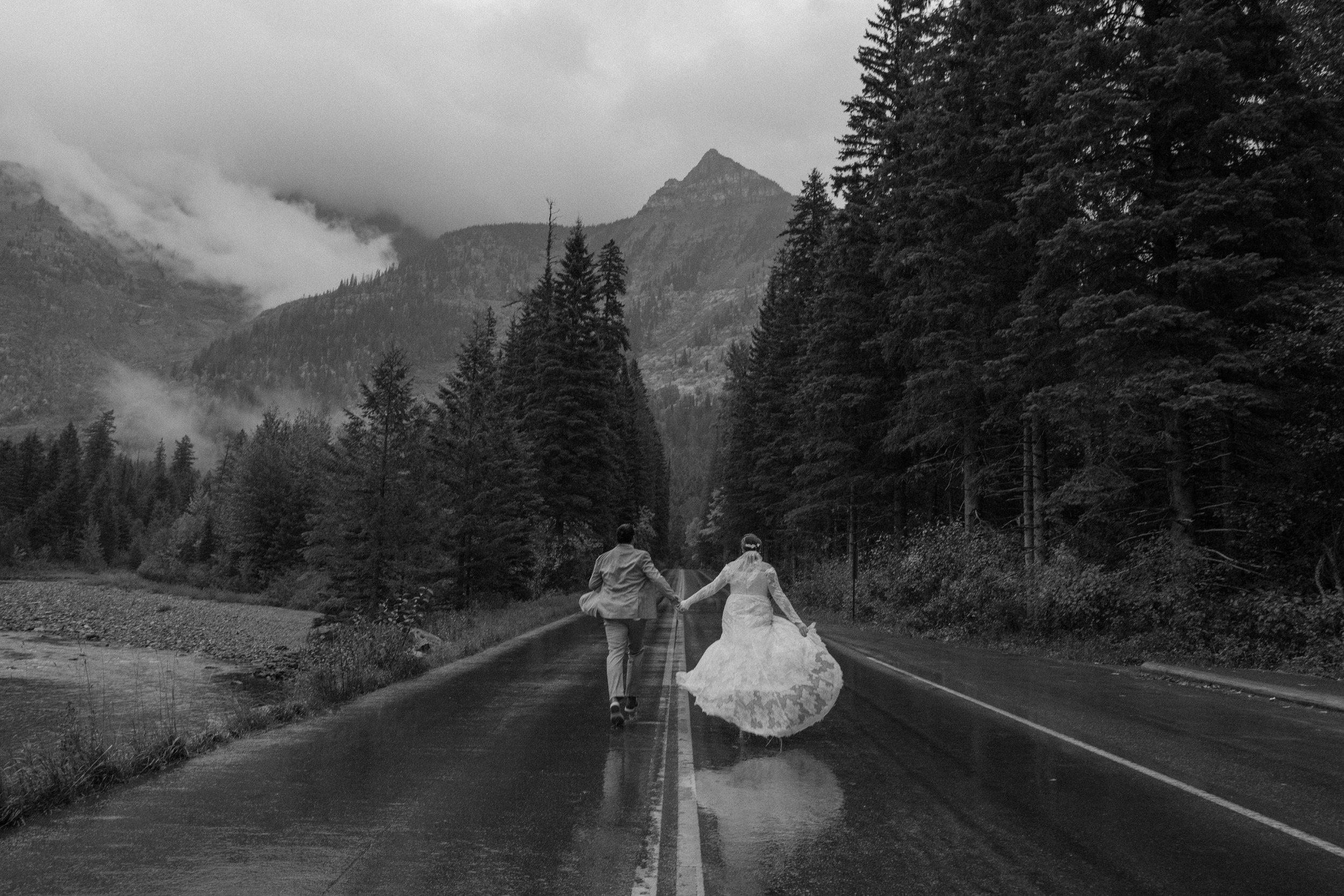
Did you know that I earned my degree in environmental sustainability studies? I am such a huge advocate for living as sustainably as possible in order to protect our lands for everyone to enjoy, so the topic of this blog is one that’s very close to my heart. I’ll be walking you through how to Leave No Trace when you elope outdoors, and giving you my best sustainable wedding ideas! It’s very important for me to ingrain this passion of mine into everything I do with my business, especially since I work with couples who love spending time outdoors and ALSO want to do their part to protect the land they visit.
Fun fact: I’m also part of a new organization called Emerald Hour, which focuses on empowering wedding vendors to create more sustainable events in the PNW! It’s such a cool idea and has the potential to make a HUGE difference when it comes to minimizing the impact of elopements in our beautiful mountains, forests, on our beaches, etc. If you’re a wedding vendor (or are getting married & want your own vendors to be familiar with Emerald Hour), I highly recommend checking out their website – they’ve got tons of tools & resources to help wedding vendors run more sustainable businesses!
What is Leave No Trace?
First off, let’s talk about what “Leave No Trace” even is for those of you who aren’t familiar with it. LNT is an organization dedicated to helping people explore the outdoors and experience all the beauty this world has to offer, in a sustainable way! It has TONS of educational programs, trainings, and free resources available for all of us to learn how to minimize our impact every single time we step outside. As their website says, “there’s no substitute for nature” – nothing inspires me and helps give me a bit of a reset like spending time outside, be it for a quick walk, a multi-mile hike, or an overnight backpacking trip. And if you’re considering eloping outdoors, I’m sure you can relate!
LNT has 7 specific principles in place to help us reduce our impact on the beautiful lands we get to enjoy:
Plan Ahead & Prepare
Travel & Camp on Durable Surfaces
Dispose of Waste Properly
Leave What You Find
Minimize Campfire Impacts
Respect Wildlife
Be Considerate of Others
These principles are meant to provide a simplified framework that’s easy for anyone to understand & keep in mind when spending time in nature, and they apply to almost any type of outdoor activity you might participate in! I’ll be going through these principles a little later in this blog, and specifically how each principle can be applied to your outdoor elopement.


Why Should You Care About Leaving No Trace?
Hopefully I don’t have to explain this too in-depth, but the simplest reason you should care about Leaving No Trace is because you’ll be empowered to help contribute to conservation efforts & you can make a true difference in protecting our lands! If we are constantly going outside without any concern for the way our human behaviors affect the land, and the habitats of wildlife, our impact can be detrimental to wilderness areas, to local parks, to national parks, and even to our own backyards.
Here are just a few of the biggest problems we face today and will continue to face if we aren’t intentional about protecting our lands, according to LNT:
Polluted water
Trashed natural areas
Lack of inclusivity in the outdoors
Wildlife at risk
Damaged trails
Destructive fires
Overcrowding
Nature should be available for everyone to enjoy and recreate responsibly for YEARS to come – and if you’re a couple looking to elope outdoors, it’s important to do your part to make sure future couples can enjoy the land just as much as you do!

How to Leave No Trace With Your Elopement: The 7 LNT Principles
Now that you know what it means to Leave No Trace & why it’s so important, let’s talk about the 7 LNT Principles and how you can apply them to your outdoor elopement.
1. Plan Ahead & Prepare
This first principle is all about being intentional with your planning, and preparing in advance for your time spent outside. The goal is that you have a safe and enjoyable trip while also minimizing your impact, which is most likely to happen if you plan in advance. Let’s say you plan to stay the night at a certain campground without advance reservations, and there aren’t any other campgrounds within 15 miles: what happens if you arrive and there aren’t any sites left at the campground? If it’s late at night and you’re exhausted from driving/hiking, you may be tempted to just pull off the side of the road and set up camp in a restricted area because you think “it’ll be okay this one time!” Planning in advance and having backup plans in place ensures that you don’t have to resort to decisions like this that could result in damage to lands, and that you have a safe trip no matter what happens.
Here are a few ways you can follow the “Plan Ahead & Prepare” principle for your outdoor elopement:
If you’re backpacking overnight or camping, make reservations in advance so you’re guaranteed to have a place to sleep.
Have at least 1 backup ceremony location in place, in case the original trail you planned to take is closed for any reason. This way, you won’t be tempted to trek into a restricted area “just for a few minutes” or “just for a few photos!”
Pick hikes/activities that are realistic for the skills & abilities of your group members to ensure you have a safe time.
Get to know the place you’re eloping beforehand so that you’re familiar with the area, especially maps of the location.
Make sure your group size is appropriate for the location you want to hold your ceremony, so that you’re able to follow LNT criteria. E.g. there needs to be enough room for all of you to stand without stepping off trails!

2. Travel & Camp on Durable Surfaces
The next principle is about traveling & camping on durable surfaces to make sure you’re not trampling surface vegetation or wildlife, and to protect surfaces from soil erosion. This is a huge issue when it comes to backcountry travel & hikes, as inexperienced hikers will sometimes think it’s okay to go off-trail, when this can actually result in a ton of damage to natural areas that are NOT meant to be walked on.
Here are a few ways to make sure you follow the “Travel & Camp on Durable Surfaces” principle for your outdoor elopement:
Stay on trails!! Easy peasy. I promise you we can find great views without having to go off-trail!
Make space for other hikers who are coming toward you, so that they don’t have to step off-trail to pass you.
Get familiar with the different surfaces you may encounter:
Rock, sand, & gravel are more durable and can tolerate more foot traffic
Ice & snow are good choices if you don’t know where to walk if they’re deep enough to protect the vegetation
Living soil, which is most present in desert environments, is super susceptible to damage from foot traffic
Set up camp at actual campsites (not just in remote, undisturbed areas) and follow campsite rules & regulations.


3. Dispose of Waste Properly
This principle should be one of the easiest ones, as all it asks you to do is dispose of your waste properly! Leaving trash in the wrong places can affect the people around you, water access, and wildlife. This goes for waste of ALL kinds: human waste, food waste, animal waste, and anything else you need to throw out. You can check out this page on the LNT website for specific instructions on how to dispose of each kind of waste, as there are a variety of ways to do so depending on the kind of location you’re at.
Here are a few ways to make sure you dispose of waste properly for your outdoor elopement:
Dig a cat hole (more details here) & pack out used toilet paper (as well as tampons) when you need to use the bathroom in the woods.
Bring plenty of plastic bags or garbage bags to use when you don’t have garbage containers nearby.
Bring doggie bags if you’re bringing your dog along.
If you’re camping, make sure to dispose of food waste in the appropriate containers so that your campsite neighbors don’t have to see/smell it.
Do NOT throw any sort of confetti, flower petals, etc. during your ceremony – because it will be impossible for you to fully clean up!
4. Leave What You Find
This is probably one of the most important principles, and one that most people don’t think about when spending time outdoors. I know it can be sooo tempting to take a cool rock that you found, or to pick a pretty flower to put in your hair, or to take a seashell as a memory of your time on the beach. It’s easy to think it wouldn’t make an impact if you just took ONE leaf or ONE flower, but if everybody did that, it would definitely have a big impact! You should always minimize any changes you make to areas you visit, including leaving everything you find: tree bark, leaves, flowers, natural objects, cultural artifacts, rocks, seashells, etc. Take a picture instead to remember your time by!
Here are a couple ways to make sure you follow this principle for your outdoor elopement:
If you find a cool rock or a beautiful plant, ask your photographer to take photos of it instead of taking it with you as a memory of your special day.
Don’t carve your initials or a heart into trees – this causes severe damage to tree trunks!


5. Minimize Campfire Impacts
Next, you want to minimize the impact of your campfires as much as possible! It’s important to consider how campfires could affect the area you’re in and whether or not you could go without one (e.g. if you have a portable stove to use for cooking, and if it’s warm enough outside). Make sure you’re aware of the current fire danger in the area, what restrictions are in place by whoever manages the area (e.g. the NPS, whoever runs the campsite you’re staying at), and whether there’s sufficient wood in the area so that removing wood wouldn’t make a difference. If you do have a campfire, you want to lessen the impact of it as much as possible by using an existing fire ring, allowing the wood to burn completely to ash, and putting out the fire with water.
Here are the best ways to make sure you lessen the impact of your campfire when you elope outdoors:
If you’re staying up late into the night with your friends, having drinks around the campfire, make sure that at least one of you will be awake (and sober) enough to properly put out the fire before you go to bed.
If you’re eloping somewhere hot & dry, be prepared for a fire ban and bring a stove & extra layers to keep you warm.
Find a campsite with existing fire rings.
Buy firewood from a local source or gather it responsibly, rather than bringing it from home.

6. Respect Wildlife
One of the coolest parts about exploring the great outdoors is getting to witness wildlife in its natural habitat! You can absolutely observe wildlife as long as you do so in a safe way, keeping your distance so that you don’t scare them away (or draw them closer to you). Avoid touching, feeding, or picking up ANY wild animals, and give them extra space if they have any little ones with them. It’s also important to store & dispose of your food properly to avoid attracting wildlife and affecting their health and usual habitats – make sure it’s stored securely out of reach of animals, such as in your car or closed up in your tent!
To make sure you respect wildlife during your elopement, you should
Take pictures from afar (or ask your photographer to take pictures) instead of getting close to the animal.
Bring bear canisters if you’ll be in an area with bears, and check local food storage requirements for other recommendations.
Store your food & trash in secure spots where wildlife can’t scent it.
7. Be Considerate of Others
Finally, just be considerate of others during your time exploring! Being courteous to other hikers & trail-goers will ensure that everybody is able to have an amazing experience in nature, just as you want to. Avoid playing music or making loud noises, as many people like the solitude & quiet that spending time outdoors can bring. Be careful as you pass other hikers and give them plenty of space, and make sure your dogs are well-behaved and won’t randomly go up to or bark at strangers.


Here’s how you can be considerate of others when planning your outdoor elopement:
Don’t play music during your ceremony, and be as quiet as you can.
Pick a ceremony location that can accommodate your group size without getting in the way of other visitors.
Make sure your guests also understand how to be courteous & respectful of other visitors during your ceremony.
Sustainable Wedding Ideas & Tips
Let’s wrap this up with my top sustainable wedding ideas & tips to ensure that your special day has the least impact possible on our amazing lands!

Ask your florist to use native flowers in your floral arrangements, and/or find a sustainable florist that uses only local and in-season flowers
Opt for digital invites instead of paper ones (you can design your own on most wedding websites or in a program like Canva, or buy designs off of Etsy!)
Use seed paper or a more sustainable material if you send out paper invites
Buy second-hand outfits from places like Facebook Marketplace, Goodwill, local thrift stores, or resale shops like Brides For a Cause
Buy & eat local food
Purchase eco-friendly & ethically-made wedding rings
Avoid geo-tagging trails/locations when you post your wedding photos on social media


And most importantly: hire vendors who care about sustainability! This will make a huge impact on the sustainability of your wedding day and making sure that you’re as environmentally conscious as possible.
I hope that this blog post helped you get a better understanding of how to protect our lands, and enjoy them responsibly so that we can keep them as beautiful as we can for a long time! If you care just as much about environmental issues & sustainability as I do, I’d absolutely love to help you plan your dream elopement and find the best ways for you to take the LNT principles into account. You can learn more about me & what I’m passionate about here, and reach out to me here!
Looking for more elopement resources & planning tips? Here are two of my recent favorites: